
In the last study, we saw that the table is prepared specifically for you. Now we come to a detail that, at first glance, seems almost out of place: “in the presence of my enemies.”
Why would the psalmist mention enemies at all in a scene of banquet and celebration? A table spread for a feast seems an unlikely place to bring up hostile onlookers. Yet this detail is essential, and it draws on a custom of the ancient world that gave the psalmist’s confidence its full force.
Hospitality in that world was never a matter of personal preference. It followed a strict and widely honored code of conduct, one that placed real obligations on a host once a guest had been received at his table. Chief among these obligations was protection. Once you had been formally welcomed as a guest, your host was bound to defend you from harm, even at real cost or risk to himself. To fail in this obligation was to bring lasting shame on the host’s household and name. The guest, in turn, could count on this protection as a guaranteed feature of the relationship, regardless of what dangers or enemies lurked outside.
This custom sheds real light on the psalmist’s confidence here. He is not claiming his enemies have disappeared, or that hostility toward him has ceased. His enemies remain present, close enough to watch him seated at the table. What has changed is his situation relative to them. He is no longer an exposed and vulnerable target. He has been received as a guest at God’s own table, and under deeply rooted customs of hospitality, a guest under a host’s protection cannot be touched without violating the host’s honor. The presence of enemies, rather than threatening the psalmist, actually highlights the security his status as an honored guest provides. They can watch. But by the very logic of the ancient hospitality code, they cannot act.
This image connects naturally to the shepherd imagery that dominated the earlier part of the psalm. There, God was pictured as a shepherd whose rod defended the flock against wild animals and whose presence banished fear even in the darkest valley. Now, in the image of host and guest, that same protective care takes a different but related form. The shepherd who once wielded a rod against predators is the same host who now, by the obligations of hospitality, guarantees his guest’s safety against every enemy. The specific danger has changed, from wild animal to human adversary, but the underlying assurance has not: God protects those under his care.
This confidence carries a striking boldness, worth noticing in your own life. The psalmist does not ask that his enemies be removed from view before he can feel safe. He is content to feast in their very presence, precisely because his security rests not on the absence of hostility but on the reliability of his host. This may be the fullest expression of trust in the entire psalm. Fear is displaced not by eliminating every threat, but by confidence in a relationship whose obligations guarantee protection regardless of what surrounds the table.
Whatever opposition you are facing right now, whether people who have worked against you, circumstances that feel hostile, or a situation where you feel watched and vulnerable, this verse offers a picture of security that does not depend on the absence of conflict. Instead, it depends on standing in a relationship with a host who has bound himself, by his own honor, to protect his guest to the end.
Prayer
Lord, thank you that my security does not depend on my enemies disappearing or my circumstances becoming free of opposition. Teach me to trust that as your guest, I am under your protection even while hostile eyes are watching. Where I feel exposed or vulnerable today, remind me that you have bound yourself, by your own honor, to protect those you have welcomed to your table. I ask this in the name of Jesus Christ. Amen.
Read the complete series of devotionals on Psalm 23 by clicking here: “Studies on Psalm 23.”
Did you find this study helpful?
If so, consider subscribing to Dr. Claude Mariottini’s Blog. Subscribers receive new posts on the Old Testament, biblical archaeology, and current issues in biblical studies delivered directly, so you never miss a study like this one.
I write for a global readership — currently spanning readers in 235 countries and territories — and your subscription helps this ministry of teaching continue to grow and reach even further.
If today’s post was meaningful to you, please share it with others on Facebook, X, or your platform of choice. A single share can introduce someone new to the study of God’s word.
Thank you for reading, and I look forward to sharing more with you soon.
NOTE
If you enjoyed this devotional on Psalm 23, you will enjoy reading my new book: Praying the Psalms: Finding Your Voice in Israel’s Prayer Book.
Praying the Psalms contains a devotional on all 150 psalms.
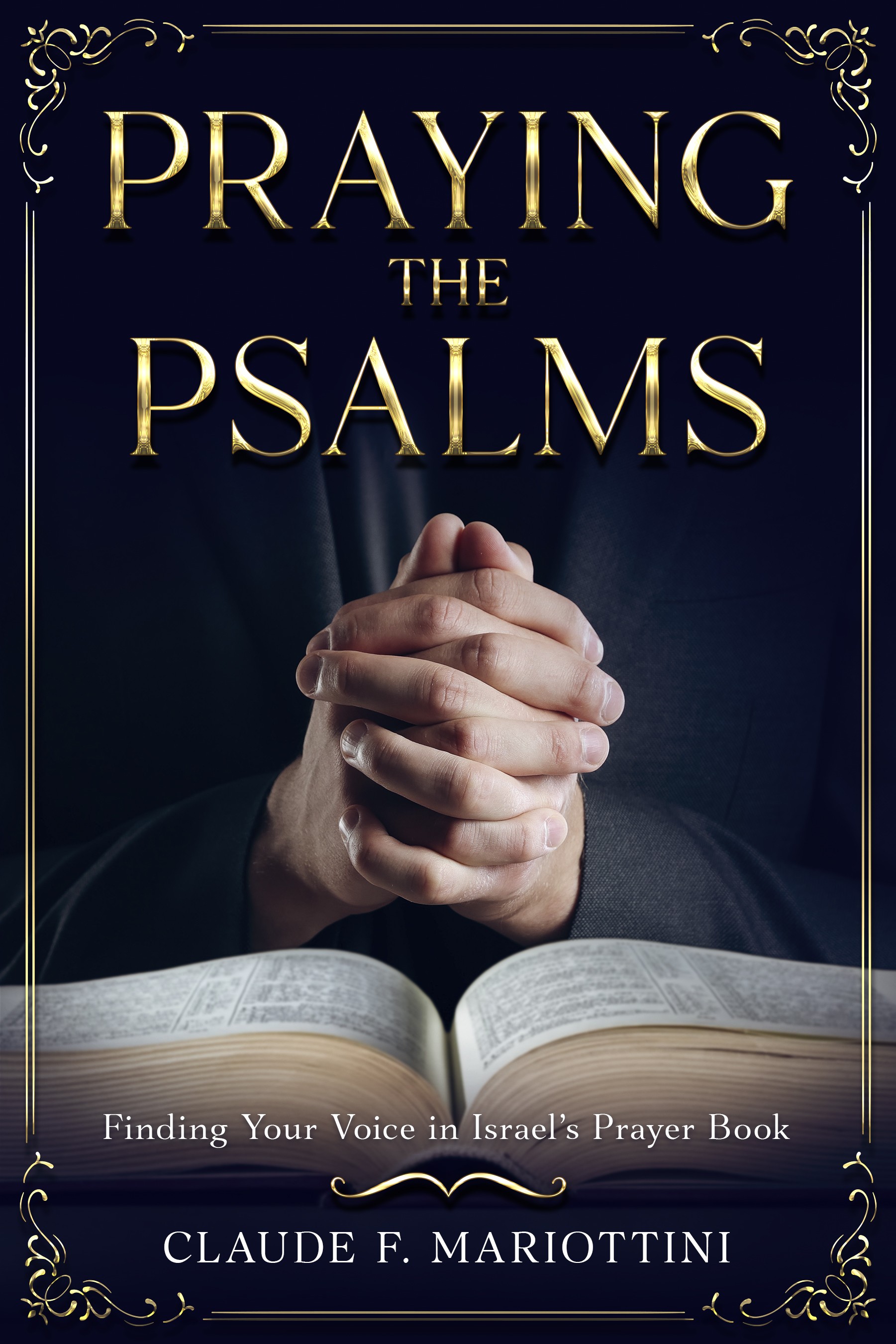
You can order the book from Ancient Path Press.
Claude Mariottini
Emeritus Professor of Old Testament
Northern Baptist Seminary
If you enjoyed reading this post, you will enjoy reading my books.
VISIT MY AMAZON AUTHOR’S PAGE
BUY MY BOOKS ON AMAZON (Click here).
NOTE: Did you like this post? Do you think other people would like to read this post? Be sure to share this post on Facebook and share a link on X so that others may enjoy reading it too!
If you are looking for other series of studies on the Old Testament, visit the Archive section and you will find many studies that deal with a variety of Old Testament topics.