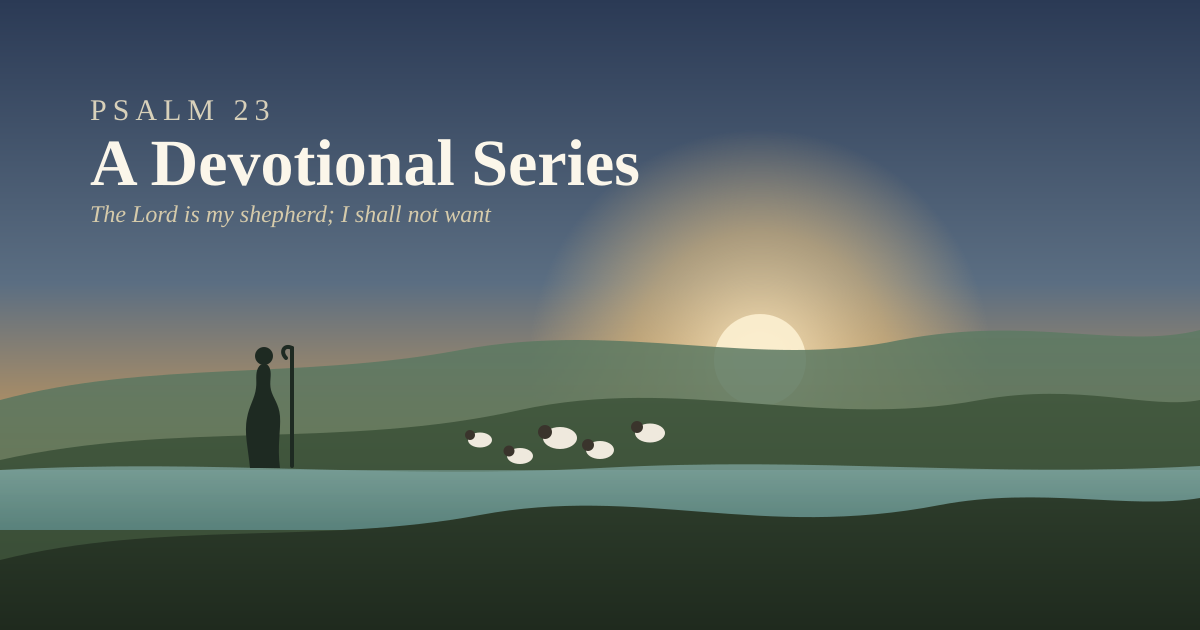
In the last study we let the valley be named honestly, without pretending it was smaller than it is. Now we sit with the psalmist’s bold response to that valley: “I fear no evil.”
Read on its own, this could sound like boasting, as though the psalmist possessed some unusual courage the rest of us simply lack. But read in context, it is something different entirely. It is not a claim about the psalmist’s own bravery. It is a claim about the reliability of the one walking beside him.
The dangers he has just named were not abstract. Wild animals that hunted at night. Robbers who preyed on the unprotected. The very real possibility of losing the path in unfamiliar, poorly marked terrain. Any one of these could end badly. A reasonable traveler, facing such a road, would have every right to be afraid. And yet the psalmist says, plainly, “I fear no evil,” meaning not one particular threat but every kind of harm the valley could bring, physical danger, human malice, or simple disorientation in the dark.
What could possibly account for such confidence? Notice what the psalmist does not say. He does not say the valley has become safer. He does not say the wild animals have moved on, or that he has developed some special skill for staying found in the dark. His fearlessness has no source in himself at all. It rests entirely outside him, in the character of the shepherd who has already, earlier in this very psalm, been shown to provide, to restore, and to guide faithfully. Because this shepherd has already proven trustworthy in the pastures and beside the waters, the psalmist can trust him in the valley too.
This distinction matters for you, because it is easy to hear “I fear no evil” and assume the verse is asking you to talk yourself out of feeling afraid, as though fear itself were a failure of faith. It is not. The psalmist is not modeling stoic indifference to danger. He is testifying to a trust that displaces fear, not because the danger was small, but because the one walking beside him has already earned the right to be trusted with something this large.
Think of the fears you actually carry: a diagnosis you are waiting on, a job that may not last, a relationship you cannot fix, a decision whose outcome you cannot control. None of these fears are naive to feel. What this verse offers is not the demand that you stop feeling them through sheer willpower, but an invitation to notice who is walking beside you in the middle of them. Fear is not answered by pretending the valley is safe. It is answered by trusting the shepherd who has already proven, again and again, that he does not abandon his flock.
Prayer
Lord, I confess that fear rises easily in me when I look honestly at the dangers I am facing. Teach me to place my confidence not in the absence of danger but in your presence within it. Remind me of the ways you have already proven trustworthy in the easier seasons of my life, so that I can trust you in this harder one. Displace my fear, not by denying what is real, but by reminding me who walks beside me. I ask this in the name of Jesus Christ. Amen.
Read the complete series of devotionals on Psalm 23 by clicking here: “Studies on Psalm 23.”
NOTE
If you enjoyed this devotional on Psalm 23, you will enjoy reading my new book: Praying the Psalms: Finding Your Voice in Israel’s Prayer Book.
Praying the Psalms contains a devotional on all 150 psalms.
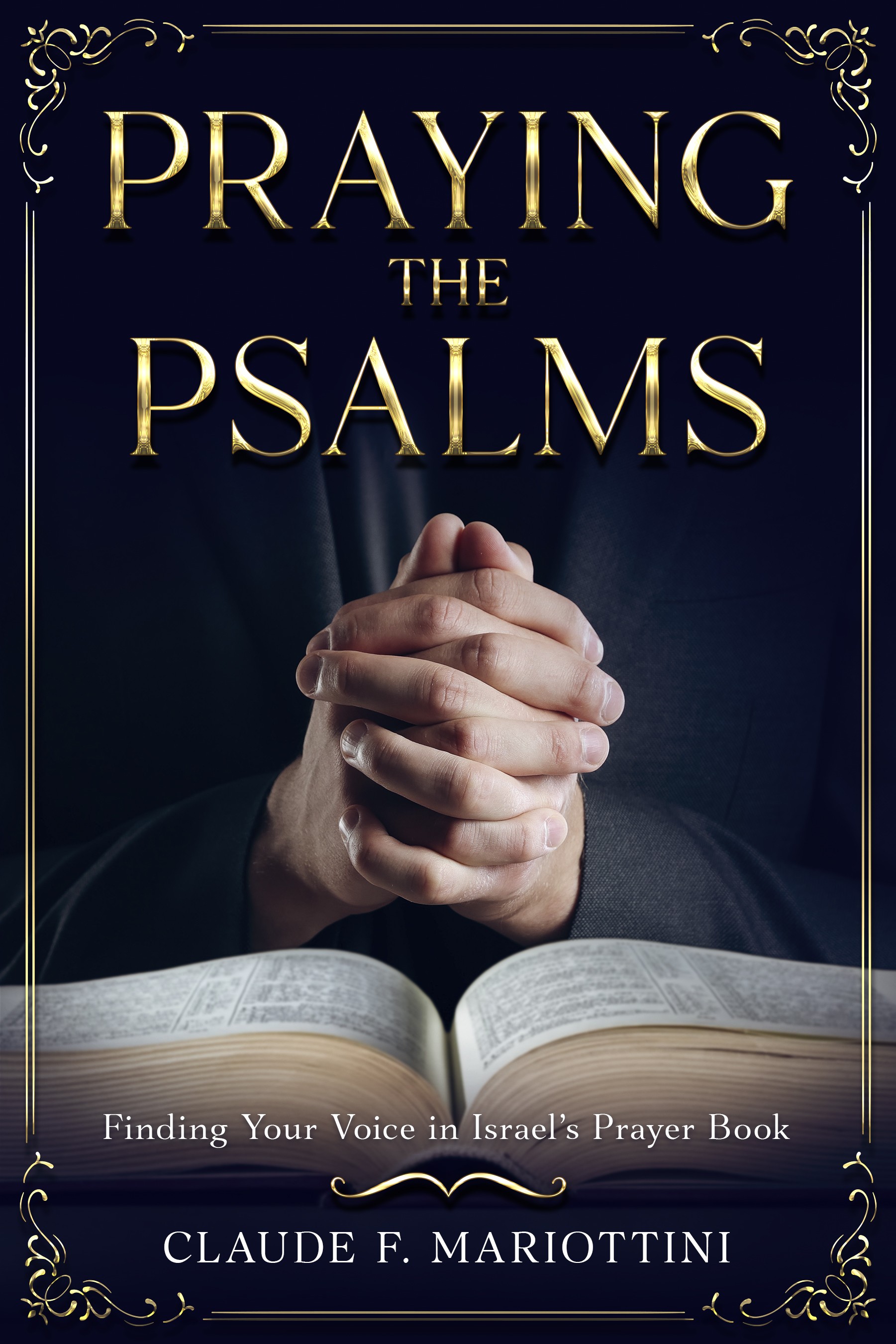
You can order the book from Ancient Path Press.
Claude Mariottini
Emeritus Professor of Old Testament
Northern Baptist Seminary
If you enjoyed reading this post, you will enjoy reading my books.
VISIT MY AMAZON AUTHOR’S PAGE
BUY MY BOOKS ON AMAZON (Click here).
NOTE: Did you like this post? Do you think other people would like to read this post? Be sure to share this post on Facebook and share a link on X so that others may enjoy reading it too!
If you are looking for other series of studies on the Old Testament, visit the Archive section and you will find many studies that deal with a variety of Old Testament topics.