
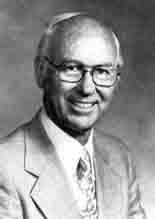
Joseph Atlee Callaway (1920–1988)
A Tribute on the Anniversary of His Death, August 23, 1988
On August 23, 1988, Dr. Joseph Atlee Callaway, one of the most respected biblical archaeologists of his generation, died suddenly of a massive heart attack. He was sixty-eight years old. I write these words as one of his former students, for I had the privilege of studying under Dr. Callaway at The Southern Baptist Theological Seminary in Louisville, Kentucky, where I served as his Garrett Fellow and wrote my doctoral dissertation, “The Problem of Social Oppression in the Eighth-Century Prophets,” under his supervision. This tribute is offered in gratitude for a teacher whose scholarship and character shaped my own vocation as a student of the Old Testament.
Early Life and Formation
Joseph Callaway was born in 1920 in Warren, Arkansas, a small town in the southeastern part of the state. He came to his theological vocation somewhat later than many of his peers. In 1948, he enrolled at Ouachita Baptist University in Arkadelphia, Arkansas, where he distinguished himself in English and literature. It was there that his intellectual gifts became evident, and it was there that he began to sense a call toward ministry and scholarship that would occupy him for the rest of his life.
In 1951, Callaway enrolled at The Southern Baptist Theological Seminary to pursue the Master of Divinity degree. While a student, he pastored the Baptist church of Worthington, Indiana, gaining the kind of pastoral experience that would later inform his teaching. During his seminary years, he discovered a deep and lasting fascination with Hebrew, the Old Testament, and the emerging discipline of biblical archaeology. That fascination led him to pursue doctoral studies, and upon completion of his Ph.D., he briefly taught at Furman University in Greenville, South Carolina, before returning to Southern Seminary.
A Career of Teaching at Southern Seminary
Dr. Callaway joined the faculty of The Southern Baptist Theological Seminary in 1958 and remained there for twenty-four years, until his retirement in 1982, as professor of Old Testament interpretation and biblical archaeology. During those years, he trained generations of ministers and scholars, instilling in his students both a rigorous respect for the biblical text and an unflinching commitment to the evidence of the ground. From 1978 to 1980, he also served as the seminary’s Director of Graduate Studies, a role that placed him at the center of the institution’s academic life during the very years I studied under him.
Even after his formal retirement in 1982, Callaway remained an active and vital presence in the field of Near Eastern archaeology. He went on to serve as president of the W. F. Albright Institute of Archaeological Research in Jerusalem, the premier American center for archaeological research in Israel, a position that placed him among the most influential figures of American biblical archaeology in the region.
The Excavations at Ai and Khirbet Raddana
Dr. Callaway is best remembered for his long and meticulous excavation of et-Tell, generally identified with the biblical city of Ai, which he directed from 1964 to 1972, with additional seasons of work continuing through 1976. The book of Joshua records that Ai fell to the forces of Joshua after the conquest of Jericho, yet Callaway’s careful stratigraphic work led him to a difficult and, for many, an unwelcome conclusion: the site showed no evidence of occupation at the time the biblical conquest was traditionally dated, whether in the fifteenth or the thirteenth century before Christ. In his own words, published shortly before his death, the excavation had, in effect, eliminated the historical underpinning of the Ai narrative as a straightforward account of military conquest.
That conclusion was not easily received within Callaway’s own denomination, and he faced real criticism from colleagues and church members who saw the finding as a challenge to the reliability of Scripture. Yet Callaway did not treat the archaeological evidence and the biblical text as adversaries. He argued instead that the narrative of Ai preserved authentic and ancient traditions of Israel’s early experience in Canaan, artfully woven together by later tradents into the account we now read in Joshua 7 and 8. For Callaway, the absence of a Late Bronze Age city at Ai did not empty the story of theological meaning; it redirected attention to how Israel remembered and interpreted its own origins.
Alongside his work at Ai, Callaway also excavated the nearby site of Khirbet Raddana, where his attention turned to the Early Bronze and Iron Age periods. His excavations there uncovered the remains of a small, unfortified Iron Age I village, contemporary with the period of the judges, that gave scholars concrete evidence of how ordinary Israelite farmers and shepherds actually lived in the central hill country of Palestine. The Raddana houses, built with a distinctive pier-and-rubble construction technique, along with evidence of domestic metalworking, supplied a material backdrop for the world described in the book of Judges. Callaway’s Raddana data proved so valuable that they later formed the basis of a full doctoral dissertation by Zvi Lederman at Harvard University, published posthumously as a tribute to the thoroughness of Callaway’s original excavation records.
A Legacy of Publication
Colleagues remembered Callaway as a scholar who resisted the temptation to move restlessly from one dig to the next before completing the hard work of publication. He was determined that the data his teams uncovered would not remain buried a second time in unpublished field notes. Among his major publications are The Early Bronze Age Sanctuary at Ai (et-Tell), issued in 1972; Excavating Ai (et-Tell): 1964–1972, published in 1976; and The Early Bronze Age Citadel and Lower City at Ai (et-Tell), which appeared in 1980. He also contributed numerous articles to the Review and Expositor and to the Annual of the American Schools of Oriental Research, and he served for years on the editorial advisory board of Biblical Archaeology Review, where he was also a popular lecturer at the society’s seminars for both scholars and interested lay readers.
Barely two weeks before his death, Callaway was presented with a nearly five-hundred-page festschrift containing twenty-two scholarly essays written in his honor by friends, students, and colleagues. He did not live to see the publication, later that same year, of Ancient Israel: A Short History from Abraham to the Roman Destruction of the Temple, to which he had contributed a chapter on the emergence of Israel in the land of Canaan.
A Life of Faith and Scholarship
Those of us who knew him described Joseph Callaway as a man of deep personal faith who never allowed his scientific rigor to be mistaken for a lack of devotion. A member of Crescent Hill Baptist Church in Louisville, he held together, in a single life, the vocations of pastor, teacher, and field archaeologist. He was, by every account, a wise and gentle human being, equally at home discussing stratigraphy with fellow archaeologists and explaining, with patience, to a congregation or a seminary class why the archaeological record sometimes complicates a familiar reading of Scripture without diminishing its authority.
I remember him this way. As chair of my doctoral committee, Dr. Callaway pressed me to examine the biblical text honestly, to follow the evidence wherever it led, and to hold my conclusions with both conviction and humility. He was demanding, but he was also generous with his time and with his encouragement. In one of his courses, I was privileged, along with other students, to evaluate some of the unpublished notes and records that Callaway had accumulated in preparation for his books on Ai and Khirbet Raddana. Out of that work came a paper of my own, “The Village Pastoral-Agrarian Economy in the Period of the Judges,” which I presented at the 1981 annual meeting of the Southeastern region of the AAR/SBL in Atlanta, Georgia. It was also under Callaway’s supervision that I prepared a second paper, “The Problem of Social Oppression in the Reign of Solomon,” presented at the 1982 annual meeting of the Southeastern region of the AAR/SBL in Gainesville, Florida. That paper became the prelude to my doctoral dissertation on social oppression in the eighth-century prophets. The scholar the wider field remembers for the excavations at Ai and Khirbet Raddana is, for me, first and always the teacher who shaped how I read the Old Testament.
Dr. Callaway was survived by his wife, Sarah Fuller Callaway. The Joseph A. Callaway Archaeological Museum, housed today at The Southern Baptist Theological Seminary, preserves the material legacy of his excavations and stands as a fitting memorial to a scholar who gave his life to uncovering, and to publishing, the ancient world in which the Old Testament took shape.
Claude Mariottini
Emeritus Professor of Old Testament
Northern Baptist Seminary
If you enjoyed reading this post, you will enjoy reading my books.
VISIT MY AMAZON AUTHOR’S PAGE
BUY MY BOOKS ON AMAZON (Click here).
NOTE: Did you like this post? Do you think other people would like to read this post? Be sure to share this post on Facebook and share a link on X so that others may enjoy reading it too!
If you are looking for other series of studies on the Old Testament, visit the Archive section and you will find many studies that deal with a variety of Old Testament topics.











 Dr. Claude Mariottini - Professor of Old Testament