
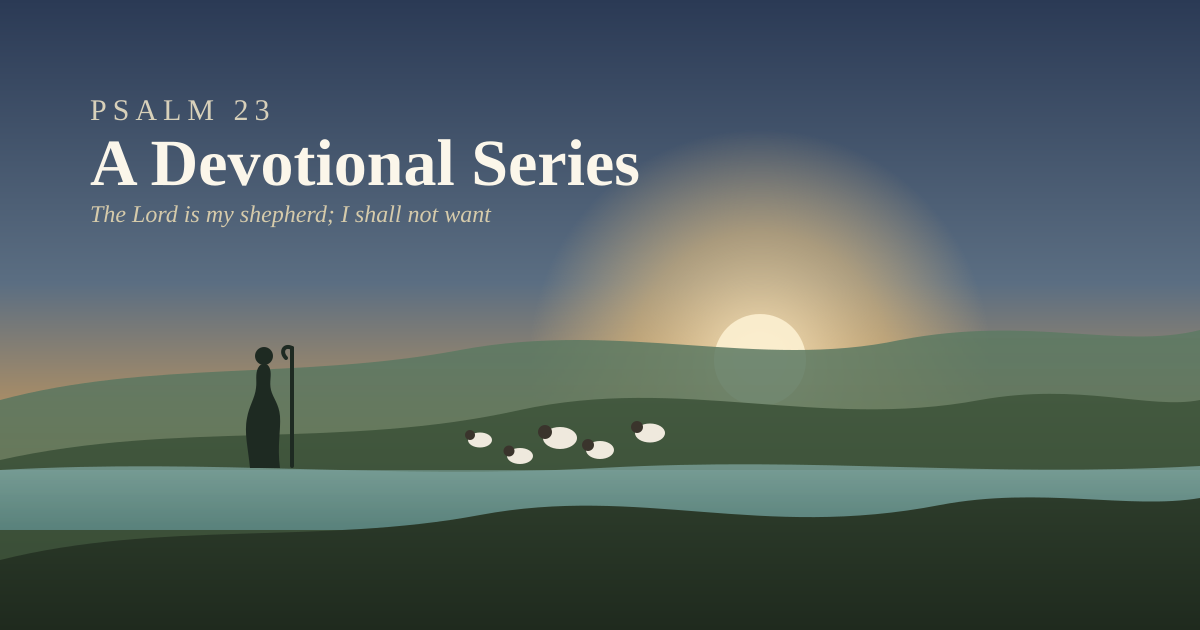
In the last study we sat with the words “I shall not want.” Now the psalm shows you what that provision actually looks like in practice: “He makes me lie down in green pastures.”
There is something almost humorous in this line, if you stop to think about it: the shepherd does not merely lead the sheep toward rest. He makes them lie down. Anyone who has cared for children, or animals, or even for their own restless mind late at night, recognizes this scene immediately. Rest is not always something we choose. Sometimes it must be insisted upon.
Sheep, left to themselves, will often keep grazing anxiously long after they have enough, or wander in search of something more, never settling long enough to actually be nourished by what is right in front of them. A good shepherd knows this tendency and will not simply point toward good pasture and hope the flock settles there on its own. He makes them lie down in it.
You likely know this restlessness from the inside. Perhaps you keep working long after the day’s real demands have been met, unable to rest until every task feels finished, which is to say, never. Perhaps you lie awake running through tomorrow’s worries as though enough rehearsal might solve them tonight. The green pasture of God’s provision may already be spread out in front of you, and still you graze anxiously past it, unable to settle.
God has met this same restlessness in his people before, and the story of manna in the wilderness shows exactly how patiently he worked to teach them rest. Freed from slavery in Egypt but afraid of what the wilderness might do to them, the Israelites woke each morning to bread that had appeared with the dew, enough for that single day. They were told to gather only what they needed, no more, and to trust that tomorrow’s bread would come tomorrow. Some tried to hoard it anyway, saving portions overnight against tomorrow’s uncertainty, only to find it spoiled by morning. God was not simply feeding a hungry people. He was teaching an anxious people how to lie down in the pasture he had already prepared, one day at a time, without hoarding against a future he had already promised to provide for.
The pattern deepened on the sixth day, when the people were told to gather twice as much, enough for two days, so that they could rest completely on the seventh without gathering at all. This was not a suggestion. It was, in time, written into the law itself as a commandment: cease your labor, rest, trust that the world will not fall apart because you stopped working in it for one day. Even God himself, the story says, rested on the seventh day, not because he was weary, but to make rest itself a pattern worth imitating.
You may find, if you are honest, that you resist this kind of enforced rest more than you would like to admit. Productivity can feel like virtue, and stillness can feel like failure. But the shepherd who makes the sheep lie down is not asking them to prove they can survive without rest. He is interrupting their anxious grazing long enough to let them actually be nourished by what has already been provided. The pasture was never the problem. The unwillingness to lie down in it was.
Whatever restlessness you are carrying today, whatever unfinished task or unresolved worry keeps you standing when you could be lying down, hear this line as an invitation rather than a rebuke. The green pasture is already there. You are simply being asked to trust it enough to rest in it.
Prayer
Lord, forgive me for the restlessness that keeps me grazing anxiously past the rest you have already provided. Teach me, as you taught your people in the wilderness, to trust that today’s provision is enough for today, and that tomorrow will be provided for in its time. Where I am striving to earn a rest that you offer freely, make me lie down. Let me trust your pasture enough to actually be nourished by it. I ask this in the name of Jesus Christ, who invites the weary and heavy-laden to find rest in him. Amen.
Read the complete series of devotionals on Psalm 23 by clicking here: “Studies on Psalm 23.”
NOTE
If you enjoyed this devotional on Psalm 23, you will enjoy reading my new book: Praying the Psalms: Finding Your Voice in Israel’s Prayer Book.
Praying the Psalms contains a devotional on all 150 psalms.
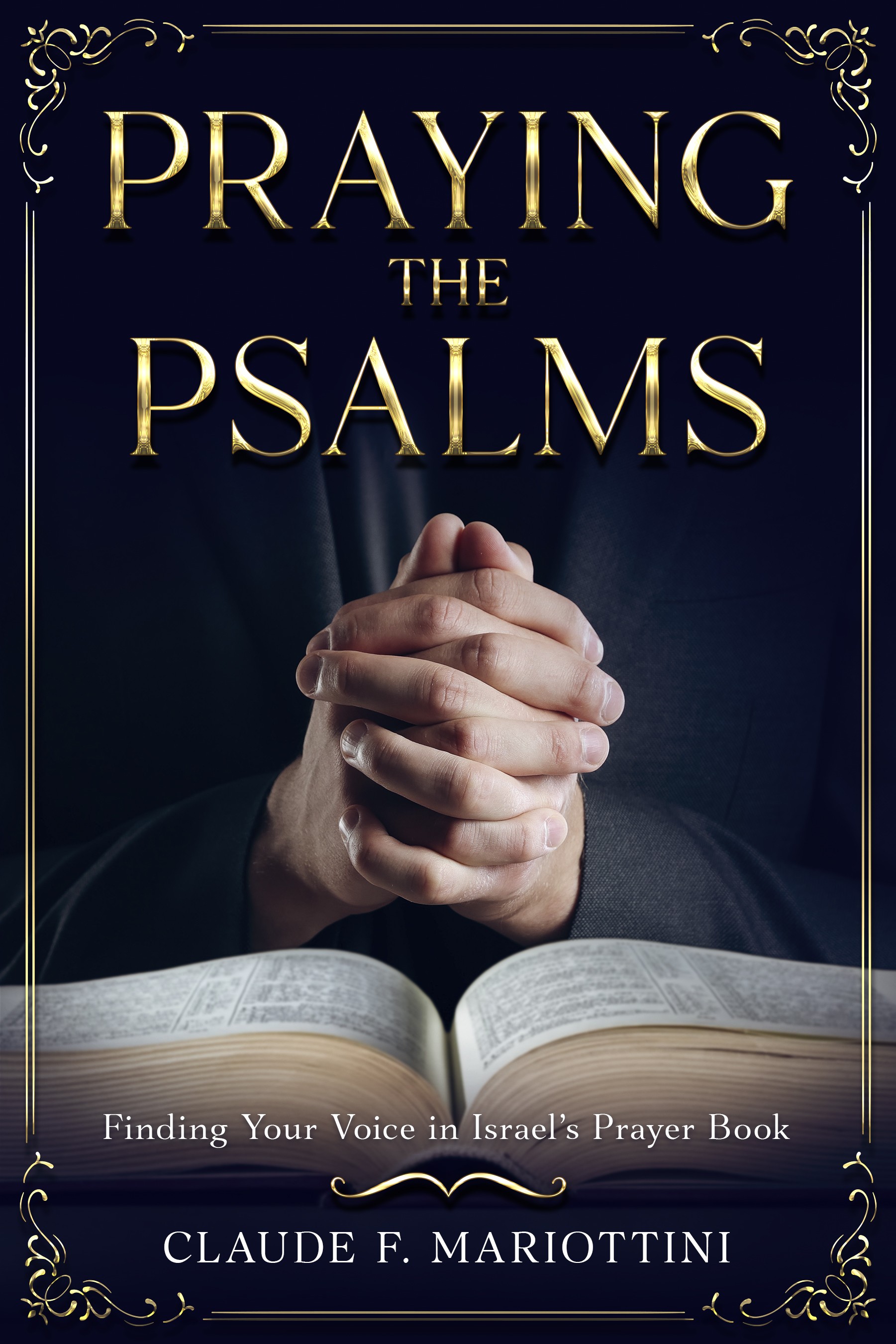
You can order the book from Ancient Path Press.
Claude Mariottini
Emeritus Professor of Old Testament
Northern Baptist Seminary
If you enjoyed reading this post, you will enjoy reading my books.
VISIT MY AMAZON AUTHOR’S PAGE
BUY MY BOOKS ON AMAZON (Click here).
NOTE: Did you like this post? Do you think other people would like to read this post? Be sure to share this post on Facebook and share a link on X so that others may enjoy reading it too!
If you are looking for other series of studies on the Old Testament, visit the Archive section and you will find many studies that deal with a variety of Old Testament topics.













 Dr. Claude Mariottini - Professor of Old Testament