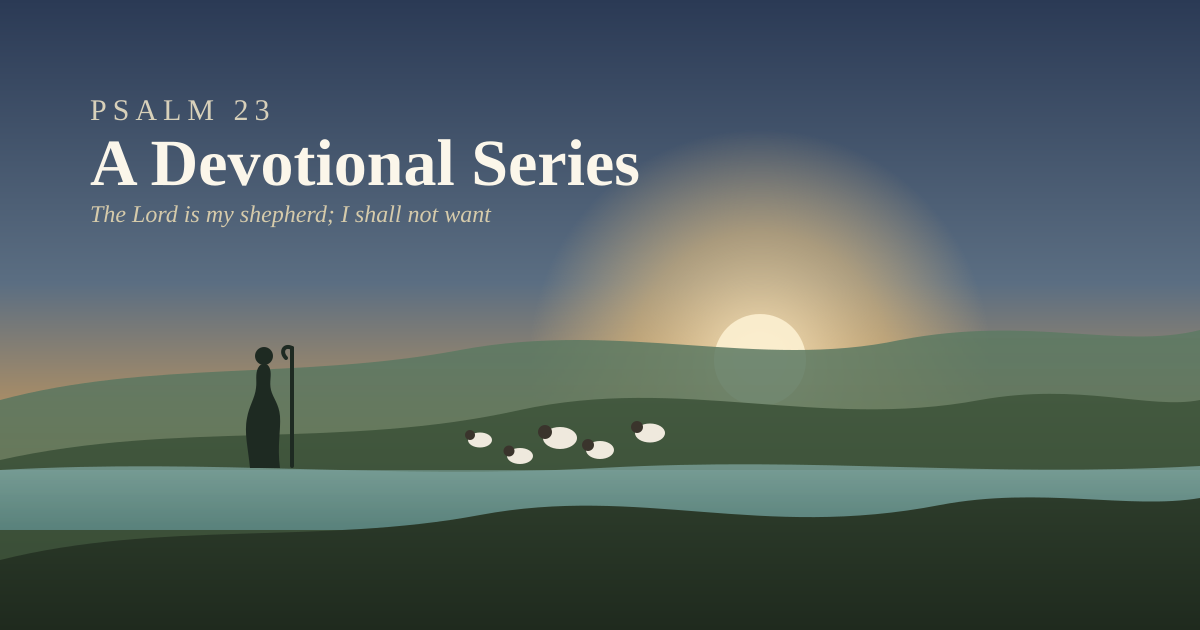
As we begin walking together through Psalm 23, we said that this would be a psalm you make your own, not merely a text you study from a distance. Before we reach its opening declaration, though, we need to pause over four small words standing just above the poem itself: “A Psalm of David.” It would be easy to skip past a title like this, as though it were only a librarian’s label. But this title carries the key to why the psalm speaks the way it does, and it carries something for your own life as well.
David wrote these words as a man who had actually been a shepherd, long before he was ever a king. As a boy in the hills near Bethlehem, he learned firsthand what it meant to lead sheep to water, to search out grazing land, and to stand between his flock and a lion or a bear with nothing but his own courage and a shepherd’s staff. When David later wrote, “The Lord is my shepherd,” he was not reaching for a pleasant metaphor he had heard secondhand. He was describing, in the most exact language available to him, what it costs a shepherd to keep sheep alive, and then declaring that God does this for him.
This matters for you, because David’s confidence in this psalm was not the confidence of someone whose life had gone smoothly. He wrote as a man who had fled for his life from a king who wanted him dead, who had hidden in caves and wilderness places wondering whether God had forgotten him, and who had also failed badly and grievously in his own conduct, sinning against Bathsheba and against Uriah in ways he could never undo. And yet this same David, wilderness fugitive and repentant sinner both, is the one who wrote, “I shall not want.” His trust in God as shepherd did not come from a life untouched by danger or by guilt. It came from a life that had been through both and had still found itself received, guided, and restored.
Perhaps you are reading this today carrying your own version of David’s history. Perhaps you have known seasons where you ran from real danger, or seasons where your own choices are the wound you are still tending. If David’s psalm could only be trusted by someone whose record was clean, it would have little to say to you, or to anyone. But because it was written by a man who knew both the wilderness and his own failure, and who still called God “my shepherd,” you are free to say the same words honestly, not as a denial of your history but as a testimony that God’s care held you through it, and holds you still.
There is a further thread worth noticing. David did not only write psalms; according to the Chronicler, he organized the singers and the instruments of Israel’s worship, so that generations after him learned to bring their fears and failures before God in song because he had shown them how. His tested faith became a pattern others could follow. The same can be true of you. The way you trust God through your own wilderness and your own regret will be watched, whether you intend it or not, by someone else who needs to see that faith can survive both.
So when you say, along with David, “The Lord is my shepherd,” you are not reciting an abstract creed. You are joining a man who knew exactly what shepherding costs, and who found that God had paid that cost for him, in every season of his life. In the next study we will sit with that opening declaration itself. For now, simply let it settle in you that this psalm was written by someone who had earned the right to say it, and who hands it to you now as a gift.
Prayer
Lord, thank you that this psalm was not written by someone untouched by danger or failure, but by a man who knew both and still called you his shepherd. I bring to you today whatever wilderness I am walking through, and whatever failure I am still carrying the weight of. Do for me what you did for David: hold me in the danger, and restore me after the fall. Let my own tested trust in you become, in time, something someone else can lean on. I ask this in the name of Jesus Christ, my shepherd. Amen.
Read the complete series of devotionals on Psalm 23 by clicking here: “Studies on Psalm 23.”
NOTE
If you enjoyed this devotional on Psalm 23, you will enjoy reading my new book: Praying the Psalms: Finding Your Voice in Israel’s Prayer Book.
Praying the Psalms contains a devotional on all 150 psalms.
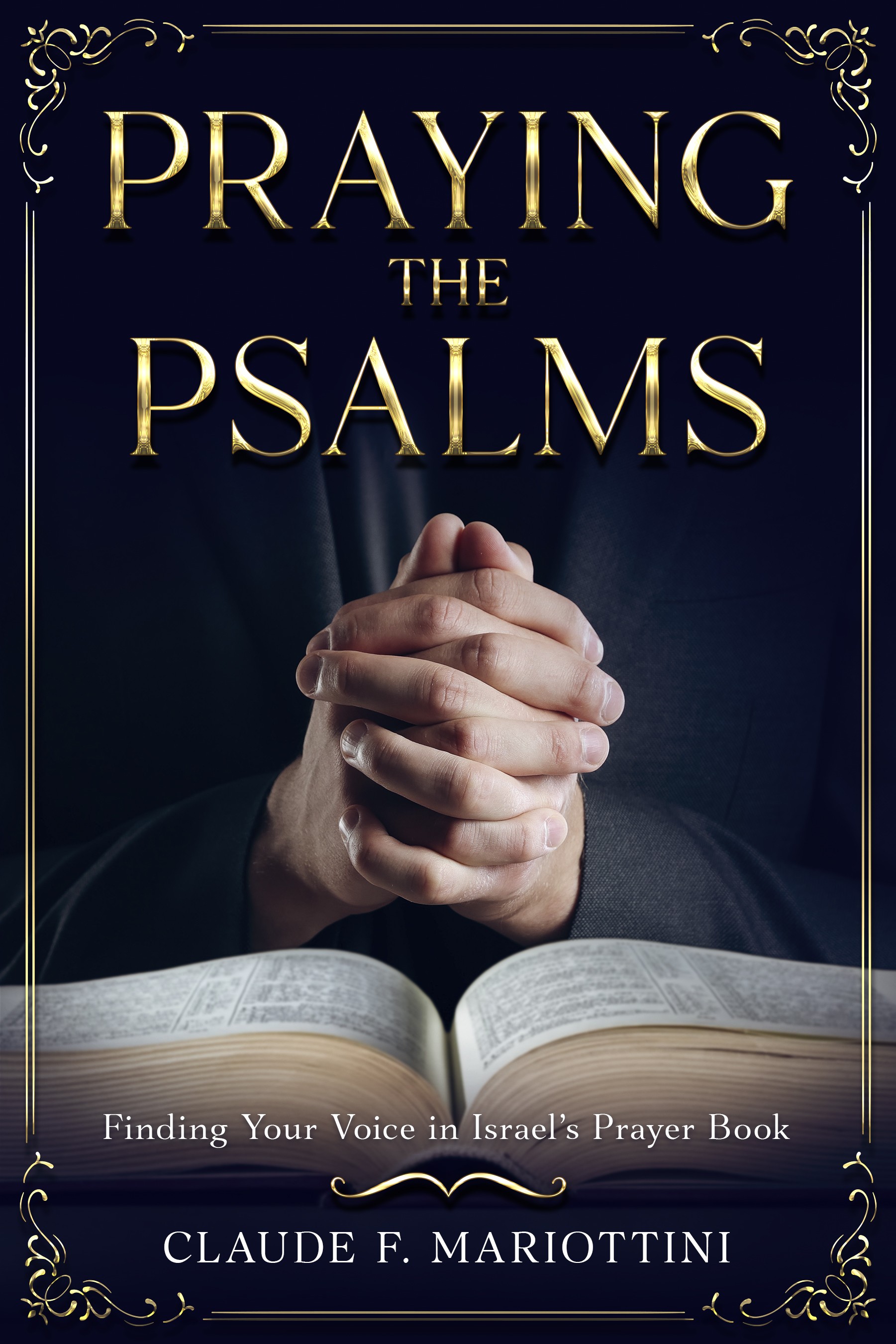
You can order the book from Ancient Path Press.
Claude Mariottini
Emeritus Professor of Old Testament
Northern Baptist Seminary
If you enjoyed reading this post, you will enjoy reading my books.
VISIT MY AMAZON AUTHOR’S PAGE
BUY MY BOOKS ON AMAZON (Click here).
NOTE: Did you like this post? Do you think other people would like to read this post? Be sure to share this post on Facebook and share a link on X so that others may enjoy reading it too!
If you are looking for other series of studies on the Old Testament, visit the Archive section and you will find many studies that deal with a variety of Old Testament topics.