
“Come, let us bow down in worship, let us kneel before the LORD our Maker; for he is our God and we are the people of his pasture, the flock under his care” (Psalm 95:6–7).
The psalmist invites us into a posture that our modern world increasingly resists. “Come, let us bow down in worship, let us kneel before the LORD our Maker.” These words from Psalm 95:6–7 call us away from the casual stance we often adopt toward the divine and into a physical, emotional, and spiritual position of profound submission. Yet within this call to humility lies one of Scripture’s most tender affirmations: we are not slaves before a distant tyrant, but rather the beloved flock of a caring Shepherd.
The Hebrew word for “bow down” carries the sense of prostration, of making oneself low before another. It appears throughout the Old Testament in contexts ranging from respectful greeting to religious devotion. When used in religious contexts, as here, it denotes the complete surrender of one’s will and pride before the Almighty. The accompanying phrase “kneel before” reinforces this imagery of physical submission. The psalmist is not merely suggesting an internal attitude; he is calling for an external, bodily act that mirrors the internal disposition of the heart. There is wisdom in this integration of body and spirit. When we assume the kneeling posture, something shifts within us. Our knees become hinges upon which our pride swings open, and our bodies become instruments of confession that we are not in control.
But notice what follows, and this is crucial. The psalmist provides the reason for this submission: “for he is our God and we are the people of his pasture, the flock under his care.” The Hebrew word for “pasture” evokes the shepherd metaphor that threads through Scripture like a golden thread. Our God is not merely powerful; he is attentive. He is not simply to be feared; he is to be followed as sheep follow their shepherd. And we, flawed, wandering, sometimes lost, are described not as servants (though we are), but as the flock under his care. This phrase suggests active, vigilant care. The shepherd does not merely own his flock; he watches over it, guides it to green pastures, and protects it from danger.
The tension between these two images is beautiful and instructive. We are called to bow in worship before our maker, to acknowledge his majesty, his power, his worthiness of absolute obedience. Yet simultaneously, we are invited into the tender relationship of sheep and shepherd, where our submission is not the fearful compliance of servants to a demanding master, but the trusting dependence of vulnerable creatures upon one whose very nature is to care for them. This is the gospel in miniature: the God who is infinitely transcendent is also intimately immanent.
In our contemporary context, where so much of life operates on the assumption that we must grasp for control, assert our independence, and refuse to kneel before anything or anyone, these verses offer a radically countercultural invitation. To bow before God is to acknowledge a fundamental truth about our existence: we are not self-sustaining. We did not create ourselves, and we cannot shepherd our own lives. The illusion of autonomy that our culture cherishes so dearly is precisely that, an illusion that leaves us anxious, exhausted, and ultimately alone.
But the psalmist calls us to something far better. When we kneel before the Lord our maker, we are not diminishing ourselves; we are finding our truest identity. We are not surrendering our humanity; we are embracing it fully. For we are made in the image of God, and it is in acknowledging his lordship that we become most fully human. And because he is not a distant, uncaring deity but a shepherd who knows each member of his flock by name, our submission is an act not of desperation but of faith.
Moreover, the plural pronouns throughout this verse, “let us bow down,” “we are the people of his pasture,” remind us that this is not a solitary act. We bow together, as God’s gathered people. Our submission is corporate. We kneel alongside countless others throughout history and across the globe who have recognized the same truth: that to fall before God is to rise into our true destiny as his beloved flock.
As you reflect on these verses today, consider: What would change in your life if you truly embraced this dual reality: the majesty before which we bow, and the shepherd whose care sustains us?
PRAYER
Almighty God, you who formed the heavens and the earth and set in motion all things seen and unseen, we come before you in humility and awe. We confess that we have so often lived as though we were our own masters, forging our own paths and defending our own kingdoms. Forgive us. Help us to kneel before you, not out of fear, but out of the grateful recognition that you are our maker and our shepherd. Grant us the grace to surrender our illusions of control and to rest, like your flock, in your faithful care. May our bowing before you be an act of worship that overflows into every corner of our lives, and may we truly know ourselves as the people of your pasture, held secure in your everlasting arms. Amen.
NOTE
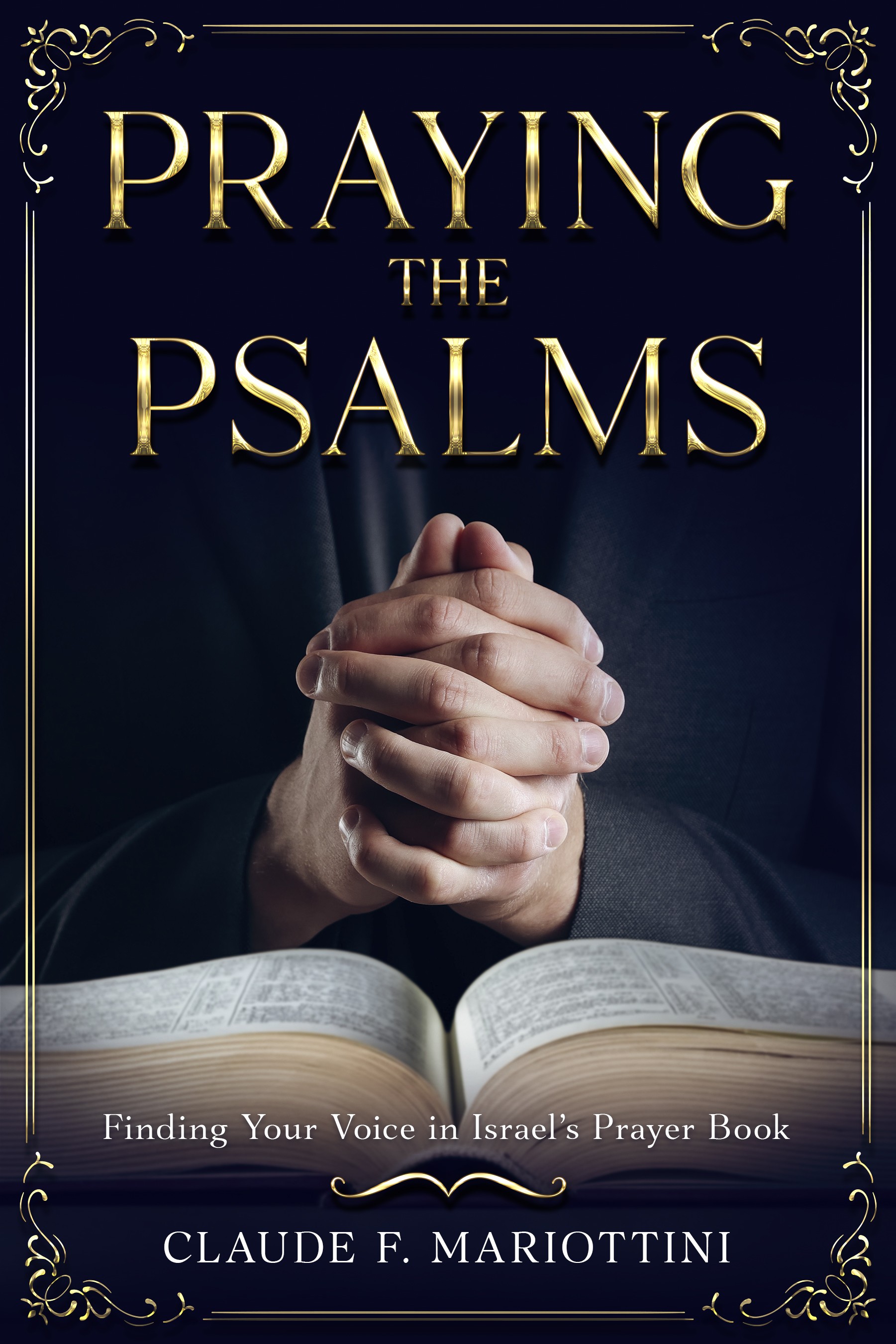
This post is a section of my new book: Praying the Psalms: Finding Your Voice in Israel’s Prayer Book.
Praying the Psalms contains a devotional on all 150 psalms. If you enjoyed this post, you will enjoy the other 149 devotionals in the book.
You can order the book from Ancient Path Press.
Claude Mariottini
Emeritus Professor of Old Testament
Northern Baptist Seminary
If you enjoyed reading this post, you will enjoy reading my books.
VISIT MY AMAZON AUTHOR’S PAGE
BUY MY BOOKS ON AMAZON (Click here).
NOTE: Did you like this post? Do you think other people would like to read this post? Be sure to share this post on Facebook and share a link on X so that others may enjoy reading it too!
If you are looking for other series of studies on the Old Testament, visit the Archive section and you will find many studies that deal with a variety of Old Testament topics.












 Dr. Claude Mariottini - Professor of Old Testament