
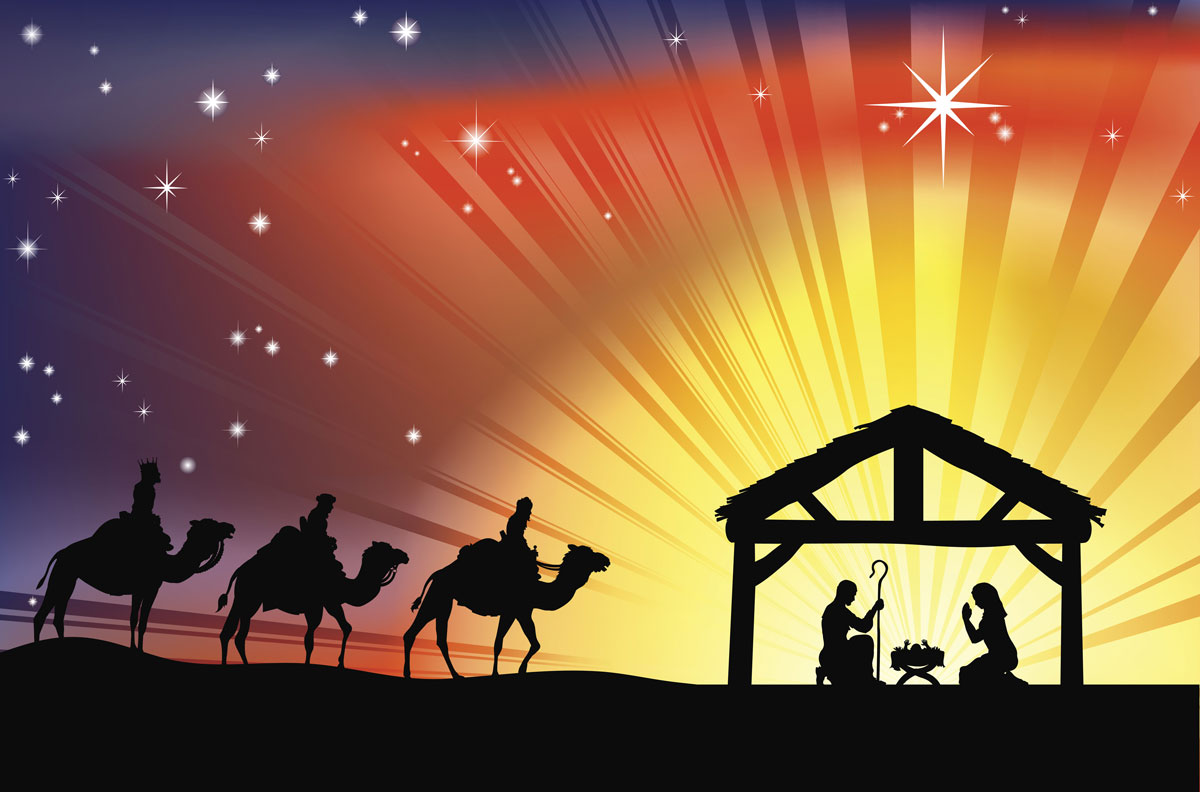
Christmas in Bethlehem
When the prophet Isaiah proclaimed his vision of an ideal king in the eighth century before Christ, he painted a portrait of hope for a weary people. “For a child has been born for us, a son given to us; authority rests upon his shoulders; and he is named Wonderful Counselor, Mighty God, Everlasting Father, Prince of Peace” (Isaiah 9:6).
These words, spoken initially to celebrate the birth of Hezekiah, king of Judah, reached beyond their immediate context to touch something more profound in the human heart—a longing for a ruler who would truly embody justice, wisdom, and peace.
Yet history tells us that Hezekiah, for all his reforms and faithfulness, could not bear the weight of these extraordinary titles. No mortal king could. The promise seemed to hang in the air, unfulfilled, waiting through the centuries for someone who could genuinely claim these names not as hopeful exaggeration but as lived reality.
This is the mystery and marvel we celebrate at Christmas. In the birth of Jesus Christ, a descendant of David born in the humblest circumstances in Bethlehem, Isaiah’s prophecy finds its true fulfillment. The child in the manger is indeed the Wonderful Counselor, whose teachings have guided billions toward truth and compassion. He is the Mighty God, divine power clothed in human flesh, entering our suffering to redeem it. He is the Everlasting Father, revealing the face of God’s tender mercy and establishing a relationship with humanity that transcends time itself. And he is, above all, the Prince of Peace—not the peace of mere absence of conflict, but the deep shalom that reconciles heaven and earth, mends what is broken in the human soul, and offers rest to the weary and hope to the despairing.
The government upon his shoulders is not one of earthly kingdoms but of hearts transformed, lives renewed, and a kingdom that is both present among us and still to come in its fullness. Where Hezekiah’s reign was limited by mortality and human frailty, Christ’s reign knows no end. The authority he wields is the authority of self-giving love, demonstrated most powerfully not on a throne but on a cross, and vindicated in an empty tomb.
As we gather this Christmas season, we celebrate not just a historical birth but an eternal truth: God has come near. The ideal king Isaiah envisioned is not a distant dream but a present reality. The child born for us is the son given to us, and in him, every promise finds its “yes.”
To all my readers, I wish you a very Merry Christmas. May you experience the peace that the Prince of Peace offers—the peace that surpasses understanding, that guards your hearts and minds. Thank you for your continued support of my work, for reading, engaging, and journeying alongside me as we explore matters of faith and life. Your encouragement means more than you know. May this season bring you joy, renewal, and a fresh encounter with the wonder of Emmanuel, God with us.
Claude Mariottini
Emeritus Professor of Old Testament
Northern Baptist Seminary
If you enjoyed reading this post, you will enjoy reading my books.
VISIT MY AMAZON AUTHOR’S PAGE
BUY MY BOOKS ON AMAZON (Click here).
NOTE: Did you like this post? Do you think other people would like to read this post? Be sure to share this post on Facebook and share a link on X so that others may enjoy reading it too!
If you are looking for other series of studies on the Old Testament, visit the Archive section and you will find many studies that deal with a variety of Old Testament topics.











 Dr. Claude Mariottini - Professor of Old Testament
Thanks, Claude! A wonderful reminder on this day of celebrating the Prince of Peace’s coming! Merry Christmas to you as well!
LikeLike
Paul,
Thank you for your nice words.
I am responding to your comment several weeks after Christmas. I appreciate your words.
How was the conference about hell? I am sure it was a great time sharing ideas about this interesting topic.
Claude Mariottini
LikeLike
If you read the Old Testament, Moses sons are not chosen as his successor, because they have not studied Torah and Joshua is chosen by G-d. That is the last time Moses sons by his Midianite wife Zipporah are mentioned. Zipporah’s father was a Midianite priest. Jews do not claim descent from Moses, just his brother Aaron so your post about the PM being his descendent is nonsense to be kind.
LikeLike
Diane,
Thank you for visiting my blog. Your comment has nothing to do with the post.
I am sure you meant your comments for another post. Any way, I appreciate you comment.
Claude Mariottini
LikeLike