
NOTE:
This post has been withdrawn. The post has been published in my book, Rereading the Biblical Text: Searching for Meaning and Understanding. The approach taken in the book is to compare how different translations have approached difficult texts in the Old Testament. The goal of the book is to invite readers to reread the biblical text in light of the new understanding of the intent of the original writer of the text. You can order the book from Amazon.
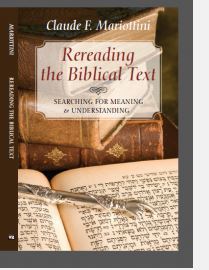
Rereading the Biblical Text
Visit my Amazon author’s page to purchase the book (click here).
Claude Mariottini
Emeritus Professor of Old Testament
Northern Baptist Seminary
A Note About This Post:
Before “Translating Genesis 3:15 – Part 2” was withdrawn for publication, “Translating Genesis 3:15 – Part 2” was read by 6939 readers. “Translating Genesis 3:15 – Part 2” was also shared 4 times by readers who enjoyed reading the post. You can read “Translating Genesis 3:15 – Part 2” and other articles on problems in Bible translation by reading my book Rereading the Biblical Text: Searching for Meaning and Understanding. Below is the content of the book:
CONTENTS
Acknowledgments – Page xi
Abbreviations – Page xii
Introduction – Page xv
SECTION 1 — THE PENTATEUCH
Chapter 1. The Creation of Animals in Genesis 2:19 – Page 3
Chapter 2. The Serpent Was Right (Genesis 3) – Page 7
Chapter 3. The Seed of the Woman (Genesis 3:15) – Page 11
Chapter 4. Were They Really Giants? (Genesis 6:4) – Page 17
Chapter 5. “As Far as Dan” (Gen 14:14) – Page 20
Chapter 6. Abraham and the Promises of God – Page (Genesis 12:7) – Page 23
Chapter 7. The Sacrifice of Isaac (Genesis 22:8) – Page 26
Chapter 8. The Rape of Bilhah (Genesis 35:22) – Page 29
Chapter 9. Miriam, a Leader in Israel (Exodus 15:20) – Page 32
Chapter 10. Azazel (Leviticus 16:8-10) – Page 35
Chapter 11. Understanding Numbers 24:24 – Page 38
SECTION 2 — THE HISTORICAL BOOKS
Chapter 12. The Levite and His Concubine (Judges 19:1–30) – Page 43
Chapter 13. The Sacrifice of Jephthah’s Daughter (Judges 10:6–12:7) – Page 47
Chapter 14. The Fate of Jephthah’s Daughter (Judges 10:6–12:7) – Page 4750
Chapter 15. The Virginity of Jephthah’s Daughter (Judges 10:6–12:7) – Page 54
Chapter 16. Who Went Back to the City? (Ruth 3:15) – Page 59
Chapter 17. Was Ruth Barren? (Ruth 4:13) – Page 59
Chapter 18. King Saul: Little in His Own Eyes (1 Samuel 15:17) – Page 63
Chapter 19. How Old Was Saul? (1 Samuel 13:1) – Page 64
Chapter 20. David and Melchizedek (Psalm 110:4) – Page 67
Chapter 21. David’s Sons Were Priests ((2 Samuel 8:18) – Page 70
Chapter 22. “Him that Pisseth against the Wall” (1 Samuel 25:22) – Page 72
Chapter 23. Whose Cloak Did Ahijah Tear? (1Kinga 11:4–7) – Page 78
Chapter 24. The Challenges of Parenthood (2 Kinga 21:25–26) – Page 82
SECTION 3 — THE WISDOM AND POETICAL BOOKS
Chapter 25. Psalm 8:5: In Search of a Better Translation – Page 87
Chapter 26. Understanding Psalm 17:14 – Page 90
Chapter 27. Jezebel’s Wedding Song (Psalm 45:1–17) – Page 93
Chapter 28. Psalm 100:3: In Search of a Better Translation – Page 99
Chapter 29. Sons or Children? (Psalm 127:3-5) – Page 103
Chapter 30. Proverbs 29:18 – Page 106
Chapter 31. “Black and Beautiful” or “Black but Beautiful”? (Song of Songs 1:5) – Page 108
SECTION 4 — THE PROPHETICAL BOOKS
Chapter 32. The Use of Gender Inclusive Language (Isaiah 9:1) – Page 115
Chapter 33. “You Have Increased Their Joy” (Isaiah 9:3) – Page 118
Chapter 34. Who Will the Messiah Strike? (Isaiah 11:4) – Page 120
Chapter 35. The Way of the Lord (Isaiah 40:3) – Page 122
Chapter 36. “All Their Goodliness” (Isa 40:6) – Page 126
Chapter 37. The Proclaimer of Good News (Isaiah 40:9) – Page 129
Chapter 38. The Problem of Divorce in the Old Testament (Isaiah 50:1) – Page 132
Chapter 39. Beulah Land (Isaiah 62:4) – Page 135
Chapter 40. The Balm of Gilead (Jeremiah 8:22) – Page 138
Chapter 41. The Mother of Seven (Jeremiah 15:9) – Page 142
Chapter 42. The Coming of the Messiah (Daniel 9:25–27) – Page 144
Chapter 43. The Seventy Weeks of Daniel (Daniel 9:25–27) – Page 148
Chapter 44. The Knowledge of God (Hosea 4:1) – Page 152
Chapter 45. The Word “Hesed” in the Book of Hosea (Hosea 4:1) – Page 154
Chapter 46. The Word “Justice” in Amos (Amos 5:24) – Page 157
Chapter 47. “What the Lord Requires” (Micah 6:8) – Page 160
Bibliography – Page 165
Index of Subjects – Page 169
Index of Authors – Page 171
Index of Scriptures and Other Ancient Documents – Page 173
Claude Mariottini
Emeritus Professor of Old Testament
Northern Baptist Seminary
NOTE: Did you like this post? Do you think other people would like to read this post? Be sure to share this post on Facebook and share a link on Twitter or Tumblr so that others may enjoy reading it too!
I would love to hear from you! Let me know what you thought of this post by leaving a comment below. Be sure to like my page on Facebook, follow me on Twitter, follow me on Tumblr, Facebook, and subscribe to my blog to receive each post by email.
If you are looking for other series of studies on the Old Testament, visit the Archive section and you will find many studies that deal with a variety of topics.
Bibliography:
Hamilton, Victor P. Handbook on the Pentateuch. Grand Rapids: Baker Book House, 1982.
Von Rad, Gerhard. Genesis: A Commentary. Old Testament Library. Philadelphia: The Westminster Press, 1961.
Wenham, Gordon J. Genesis 1-15. Word Bible Commentary. Dallas: Word Books, Publishers, 1987.











 Dr. Claude Mariottini - Professor of Old Testament
Thank you for sharing these thoughts, Dr. Mariottini. But in my mind they raise what I consider a deeper issue, one concerning the nature of Scripture: is it a unified, progressive revelation from God? If it is, then shouldn’t we expect to find allusions to things that aren’t made more specific until later on? Doesn’t the broader context of Scripture, even if it is written later, have something to say about referents of words that we find difficult to determine, especially in such a foundational prophecy as this? And are we even warranted in limiting the knowledge of the person who uttered the prophecy simply because we find it ambiguous?
I’m thinking of Peter’s interpretation of Psalm 16:8-11 in Acts 2:30ff. As I read that passage in the Psalms (specifically verse 27), I can find no immediate basis for understanding it as David referring to anyone other than himself. And yet Peter says that not only was David referring to Christ, but consciously so. “But he was a prophet and knew…” (Acts 2:30). Peter does not seem to be thinking of himself as “reinterpreting” the Psalm, but of giving its real meaning.
LikeLike
Ron,
Thank you for your comment. I am sure you read both Part 1 and Part 2 of my post. My purpose in writing this post was to say that Genesis 3:15 is not a prophecy about Jesus Christ. It is because people take this text as prophecy that we misinterpret the text completely.
Look at what Calvin wrote about Genesis 3:15: “I interpret this simply to mean that there should always be the hostile strife between the human race and serpents, which is now apparent; for, by a secret feeling of nature, man abhors them.” And Calvin was not a liberal. You should read Calvin on Genesis 3:15.
Claude Mariottini
LikeLike
Actually, I didn’t read Part 1—but now I will. And thanks for the Calvin reference. I’ll make sure to read him, too.
Thanks, Dr. Mariottini.
LikeLike
Ron,
You are welcome. After you read part 1, you will understand my argument.
Claude Mariottini
LikeLike
Thank you for showing us how this verse was taken out of text and twisted to make a prophetic message. I heard it all my life that this is the first prophecy of Jesus Christ. When you said you were going to write on this I read Calvin on this and this is what baffles me. I went to churches which claim they follow Calvin, yet Calvin clearly says exactly what you are saying. I actually wrestled with this all night. This morning I woke up and told God I have had enough of childish beliefs. I started reading the Bible through and will remain committed to that until I am through. Checking a lot of commentaries and making sure that I really understand what it says.
LikeLike
Michele,
Thank you for reminding me about what Calvin wrote about Genesis 3:15. I read Calvin many years ago and had forgotten his argument. Now you know that Calvin did not see Genesis 3:15 as a prophecy of Christ. Calvin was a man who loved the truths of Scriptures and who sought to provide the correct interpretation to the Bible to his listeners. I just wish more people would read what Calvin had to say on Genesis 3:15.
Claude Mariottini
LikeLike
Pingback: If Adam had not sinned. - Page 45 - Religious Education Forum
Dear brothers,
Gen 3:15 is a direct prophecy about our LORD JESUS CHRIST. Scripture testifies that. Read Gal 3:16, then Gen 22:18 and then Gen 3:15. The seed is CHRIST.
HE will bruise the serpent’s head. In fact HE had. And no one can do that mighty work other than our blessed LORD. If not HE, who?
Oh.. May the LORD be gracious to our understanding.
LikeLike
Joseph,
Read what John Calvin wrote about Genesis 3:15: John Calvin on Genesis 3:15.
Claude Mariottini
LikeLike
Thank you. I have wrestled with Christian theology for a long time, but have questioned the occurrences taking place in Genesis 3 for a long time also. This is backing up what the original meaning/meaning should be interpreted as, “seed” in the passage of Genesis 3: Vs. 15.
LikeLike
Anita,
I believe that many Christians read more into Genesis 3:15 that what the text says. Read my post on what John Calvin wrote on Genesis 3:15.
Claude Mariottini
LikeLiked by 1 person
I agree with you. Very good. Thanks.
LikeLike
Anita,
Thank you for your comment. This is one of those topics that I believe has been highly misunderstood.
Claude Mariottini
LikeLiked by 1 person
Dear Pastor, Mariottini, I found part 1 very informative and feel comfortable with the concept of the “seed” being understood in a plural sense. However, as I am coming from the Catholic tradition I would be interested in your opinion of the notion of “the woman’s the seed” being construed as an anti-type to the seed of the serpent?
Geraldine
LikeLike
Geraldine,
Good question. Since you accept the fact that the word “seed” has a plural sense, the idea that the seed of the woman is an anti-type of the seed of the woman makes sense, because in both cases the word “seed’ has a collective meaning.
Thank you for your comment and thank you for visiting my blog.
Claude Mariottini
LikeLike
I write as a complete novice so forgive my presumption. What I don’t understand, and perhaps it’s my ignorance of the use of semi-colons, but why can’t the “it” used in the King James version refer to “emnity” and “his heel” to Adam? Why can’t bruising the Serpent’s head simply mean bringing delusion and confusion to him and to those who emulate him in challenging God. And, why can’t bruising Adam’s heel simply mean rendering his and his descendents’ actions compromised and without true fulfillment/completion?
LikeLike
Erica,
Thank you for your comment. The text is difficult to understand and it has caused much confusion to translators and readers of the Bible.
The “it” of the King James cannot refer to “enmity because of the context of the passage. If the word “seed” is understood in the sense of “descendants” or “offspring” then the seed cannot be Adam. You should read my post on John Calvin on Genesis 3:15.
Thank you for visiting my blog.
Claude Mariottini
LikeLike
Regarding your comment that the Messianic reference to Genesis 3:15 should be abandoned. The word seed, zera, can be translated in the singular or plural as in descendants. Genesis 3:15 is obviously saying that the spirit that deceived Eve through the serpent would be defeated through the lineage of the woman. A lineage consists of many “seeds.” So it is not inappropriate to say this passage is not messianic.The Messiah Jesus came through that lineage. The DNA of anyone is carried through the female. Mary’s lineage (recorded under her husband’s name as was the custom) described in Luke is traced all the way back to Adam, while Joseph’s in Matthew starts from Abraham and is traced upward to Joseph. We are thus shown that the lineage of the woman Mary, that birthed the Messiah Jesus, is traced back to Eve and is the line of seeds that would fulfill that first messianic prophecy in the Bible.
LikeLike
Correction: I meant to say that is is inappropriate to say that this passage is not messianic.
LikeLike
Deborah,
Thank you for visiting my blog. You should also read my post on John Calvin’s interpretation of Genesis 3:15.
Claude Mariottini
LikeLike
Interesting confusion. After all these years and still we debate the truth of this scripture. Referring us constantly to Calvin’s interpretation is simply that referring us to Calvin’s interpretation and believe you me as you have revealed there are many opposing interpretation. What concerns me is the doctrine of Mary. That is far more vital than even the discussion of the seed. Why? If this interpretation of Mary is correct it feeds into a host of other assumptions about her that I cannot find in scripture but I am asked to simply believe. It is the foundational stone for why we are all Mary’s children and that she is without sin, seated at the throne with her son and the myriad of other things that new Testament hardly confirems. That doctrine if misunderstood has a more serious weight than who will crush whose head and hurt whose heal. Why? Because it is a a given that that process will happen if God said it will. Regardless to whether we understand all of the participants or not. My five cents.
LikeLike
Val,
Your “five cents” is worth more than just a few pennies. Genesis 3:q5 is not speaking of Mary. This interpretation finds no biblical support. I guess, that people will be dealing with the interpretation of Genesis 3:15 until the Lord comes.
Thank you for your comment.
Claude Mariottini
LikeLike